At the beginning, the task is understanding movement. Children learn to tuck the head safely, round the back, push through the hands and finish in control. Floor markings, gentle slopes and soft teaching shapes can make the pathway easier to feel. The coach watches for comfort and coordination before asking for more speed or less support. Early success should look controlled, not merely completed.
The next stage adds consistency. One successful roll does not yet mean the skill is secure. Repetition across slightly different starting positions helps the gymnast control the action rather than depend on one setup. Gymnastics equipment at this point should offer small, planned changes while keeping the purpose of the drill obvious.
As athletes develop, isolated actions begin to connect. A roll may follow a jump, lead into a balance or form part of a short floor sequence. The training area needs enough space for entry and exit, not only the skill itself. Coaches also need sightlines that let them observe the full link and stop an unsafe attempt early.
Strength and shape work continue alongside technical practice. Hollow and arch positions, shoulder control, leg tension and stable landings support many later skills. Low stations and floor drills remain useful even after athletes move onto larger apparatus. Returning to them is not a step backwards; it often fixes a weakness that becomes visible at greater speed. This link should be explained so athletes understand why familiar drills still matter throughout later advanced practice.
More advanced practice demands clearer separation between tasks. Approach runs, flight phases and dismounts use wider areas and create longer movement paths. Waiting athletes should stand outside those routes, with a defined signal for the next attempt. The equipment layout must also allow coaches to move into an effective position without crossing another station.
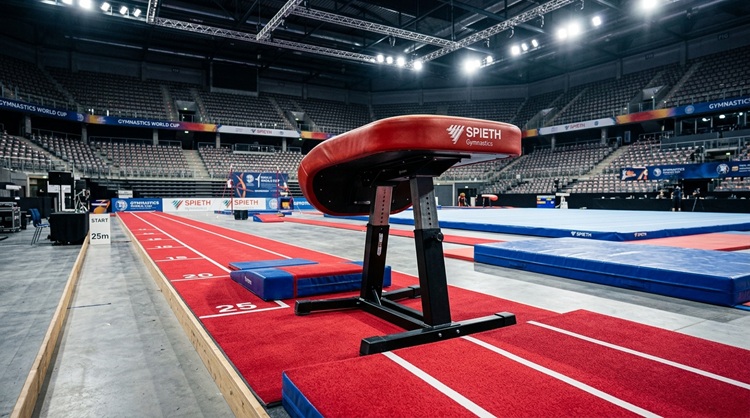
Gymnastics equipment for competition-level preparation should match the discipline and the athlete’s stage, but familiarity alone is not enough. Setup, stability, surrounding protection and landing arrangements require checking each time. Adjustments should be made deliberately and recorded where the programme’s procedures expect it, particularly when several coaches share the space.
Pressure changes performance. A gymnast who completes a skill in quiet practice may rush when routines are timed, judged or watched. Coaches can introduce these demands gradually through controlled sequences, mock rotations and planned rest. The aim is to preserve technique rather than make every session feel like an event.
Recovery also becomes part of progression. Repeated attempts without enough rest reduce attention and body control. Session plans should balance high-demand skills with lower-intensity technical work. Coaches need to notice when fatigue changes landing quality, decision-making or confidence, then adapt the task rather than chase a fixed number of repetitions.
The training history of each athlete matters. Age, growth, previous injury, confidence and time away from practice all affect readiness. Two gymnasts in the same group may need different versions of the same drill. Progress should follow reliable performance and coaching judgement, not simply time spent at one level.
Regular review keeps the pathway connected. Coaches can ask whether a drill still teaches the intended action, whether equipment creates unnecessary waiting and whether athletes understand how today’s task supports a later skill. Items that no longer fit the programme may need a different role or removal from the floor.
From the first roll onwards, development rests on careful repetition with meaningful change. Foundations stay present while challenge grows around them. When gymnastics equipment supports that sequence, athletes experience progression as a series of understandable steps rather than sudden jumps between unrelated skills.